I thought I'd share this because this video is truly emotional and inspirational.
Thanks for watching.
Friday, 8 November 2013

Friday, 4 January 2013
Log Twenty Seven: ‘A Critical Reflection on Principles of Professional Inquiry’
Introduction
Now I have critically reflected on Module Two – Principles of
Professional Inquiry - I feel I have struggled to get as engaged in Module Two
on the Principles of Professional Inquiry as I was in Module One in
Establishing Professional Practice. However, I feel I have learned valuable
aspects about designing a work based inquiry proposal.
Part
One - “Developing Lines of Professional
Inquiry”
Starting the module later than planned I quickly realised that
this module would be much harder after I had read Reader One on Developing
Lines of Professional Inquiry. Immediately I dived straight in with creating
and developing my own questions on transitions a child experiences in primary
school. After I reflected upon my questions and having a burning passion to
become a primary school teacher I proposed that my award title be “BA (Hons)
Professional Practice (Arts) Of Inclusive Teaching and Learning in Primary
Education”. I feel my valuable experience of inclusion I learned at my previous
placement (Chickenshed Theatre Company) and putting it into practice shaped my
decision.
Part
Two - “Professional Ethics and Tools of
Professional Inquiry”
Having read Reader Two on Professional Ethics I was intrigued
at the thought process one goes through in promoting good behaviour.
Immediately I felt I could relate to this thought process working at school. I
always thought it was common sense to ‘treat others how you wish to be treated’
which creates the foundations of what I believe to be the ethos of inclusive
teaching.
Part
Three - “My Learning Journey”
I feel at the start of the BAPP course I was actively engaged
in blogging about my experiences in professional practice. However, since
returning to my studies from my break I have struggled to recapture engaging
with my peers and blogging about my journey on the BAPP course. I feel the
knowledge I have gained from my learning journey on the course will help me
develop my critical thinking in my professional practice because it has opened
a door to way of thinking I never considered at work. Whilst I always maintain
an inclusive approach to my work I never questioned why I did it and why others
didn’t because it came naturally to me.
Conclusion
Upon reflection I feel while I have tried my best to be
engaged in this module following my late start that I need to be more motivated
to blog and interact more with my peers. I also feel I need to be more
assertive and feel more confident in sharing my experiences with my peers. I
will definitely look to take what I have learned and what I have identified I
need to improve on to Module Three.
Friday, 28 December 2012
Log Twenty Six: Task 4A – Professional Inquiry Questions (Part Two)
Q1. "How
does a special education needs learning support assistant (SEN LSA) impact a
child’s learning development inside and outside the classroom?"
Q2. "Why
is it important to identify a child going through a transition? And how does it
affect their development?"
Q3.
"How does praising a child’s effort and success help others focus on what
they are good at?
Q4. "Why
is it important to be consistent about classroom rules when promoting positive
behaviour?"
Thursday, 27 December 2012

Log Twenty Four: Task 5A - Codes of Practice
Having read Reader
5 on Professional Ethics I found this to be an interesting task. I found it
easier to brainstorm the codes of practice I saw at my place of work.
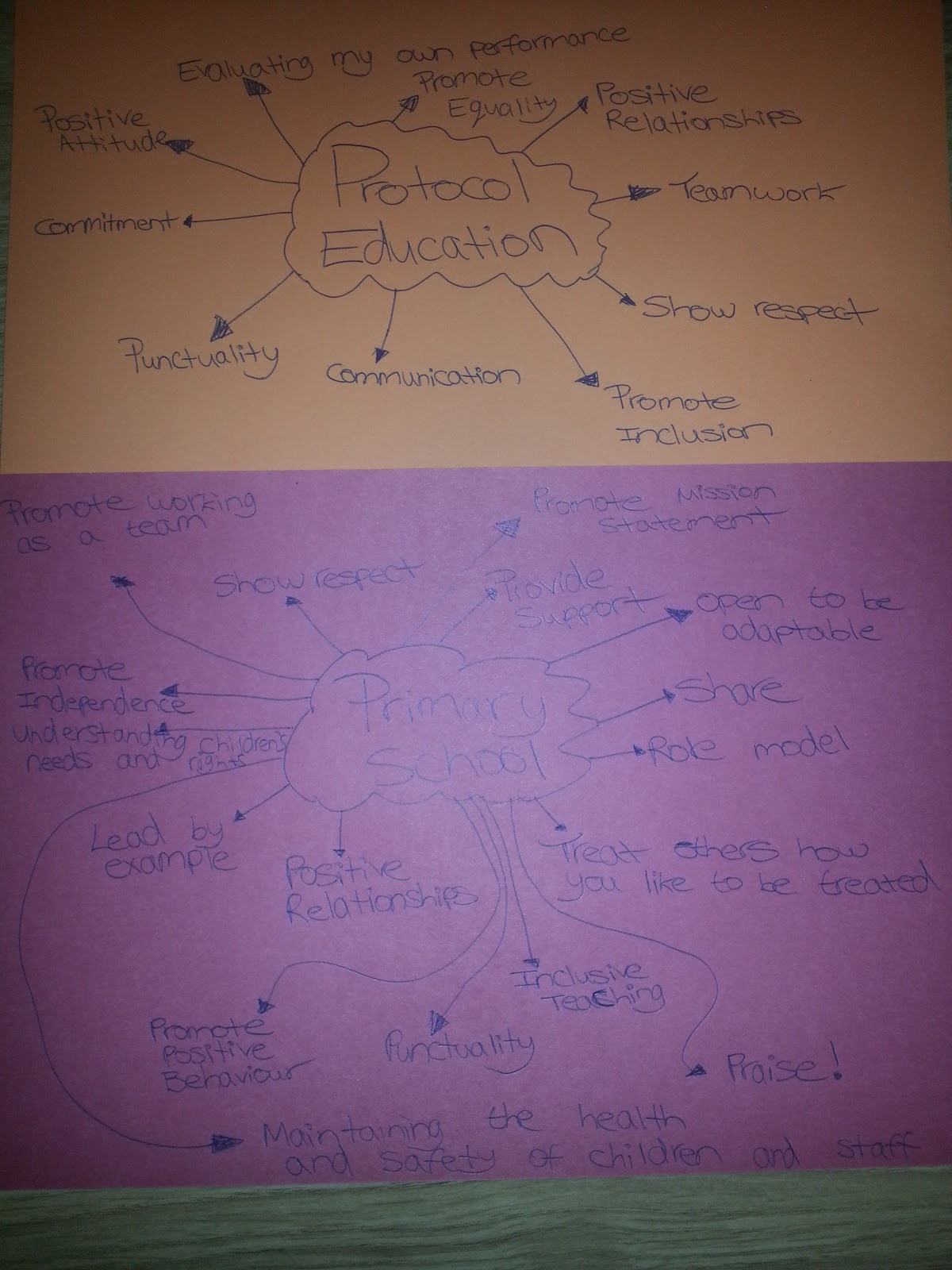
My initial thoughts,
having evaluated my own performance on a random day, I considered how I could improve
certain aspects such as ensuring children do not think that their need is
greater than others. As I have mentioned
in Log Twenty Four: Transitions the child I work with has a lot of behavioral ‘obstacles’ and
sometimes would interrupt the whole class just to be heard. I will develop this
thought process and expand on it in my professional inquiry proposal. Thanks
for reading.
Log Twenty Three: Transitions

As an SEN LSA in a
primary school I am working one to one with a child who has Attention Deficit
Disorder (ADD) and for me I always go through everyday transitions. I go
through a state of mind where I know that I have to slow down my speech for SEN
children that will take what you say literally. When a child starts at a new
school midway through term, it’s teacher and LSA’s responsibility to identify
the transition of moving schools because of a special circumstance e.g.
bullying in old school, parents being divorced, new family member. Recently, I
have been able to identify numerous children going through different
transitions that could affect their educational development so to counter this
we encourage a child going through a transition to build positive relationships
with their peers. I hope to touch more on this in my inquiry proposal. Thanks
for reading.
Log Twenty Two: Independent Learning
In my primary
school we work very hard to develop independent thinkers through teaching.
Within my role as an SEN LSA I have been able to identify independent learning
in the classroom. The class teacher has given every child a ‘job’. We have jobs
for the following:
·
Answering
the telephone
·
Sharpening
pencils
·
Register
monitors
·
To
count how many children are in after the register is taken
·
To
turn on the lights
·
To
turn off the lights
·
Handing
out books
I believe this
encourages the children learn independently as well as taking ownership and
responsibility with something within the classroom. I feel that providing children
with opportunities develops their independent learning helps build their self
confidence and positive relationships with their peers. This video clip shows
the ‘the ethos of independence’ at a primary school. Thanks for reading & watching.
http://www.tes.co.uk/teaching-resource/Independent-Learners-A-Classroom-Approach-Primary-6084061/
Subscribe to:
Posts (Atom)